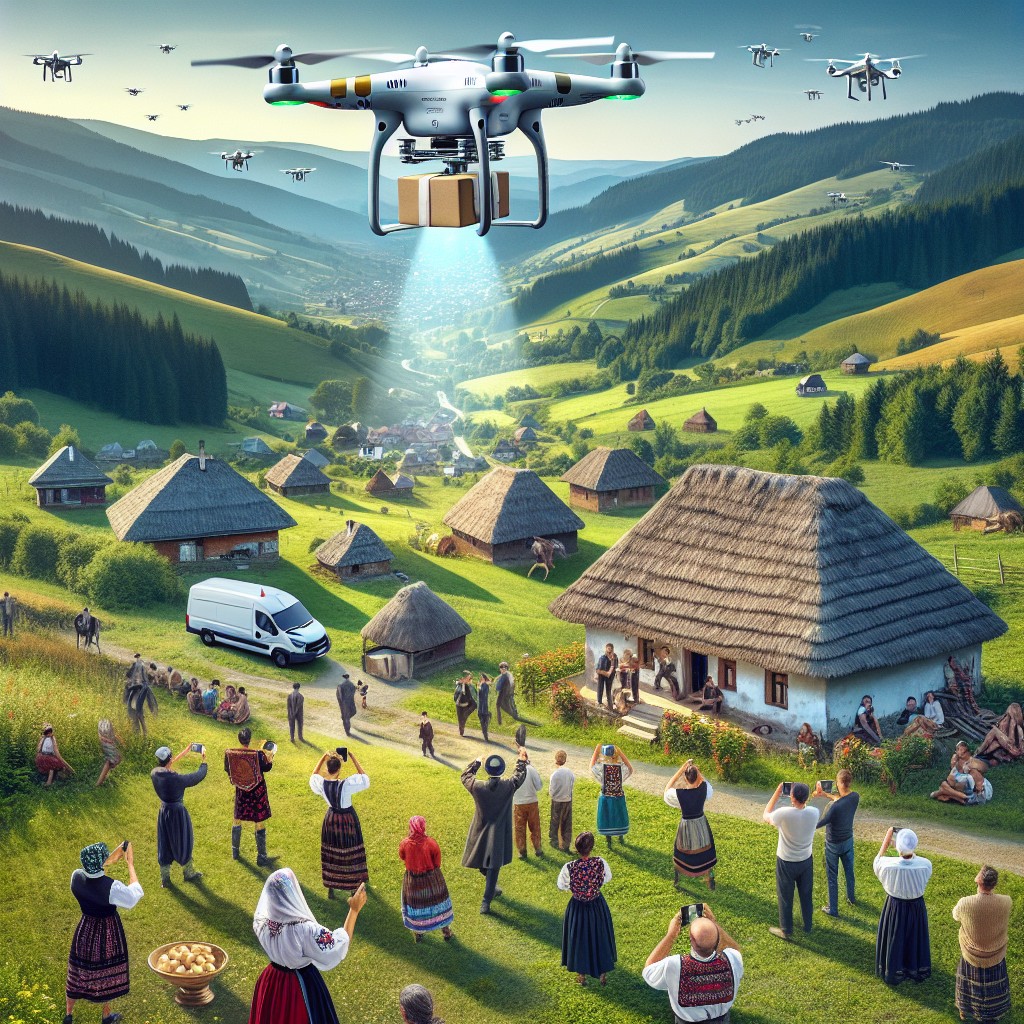
Drone delivery has emerged as a promising technology worldwide, with the potential to revolutionize logistics and supply chains. In Romania, interest in drone delivery is growing, but several hurdles must be addressed before widespread adoption becomes viable. This article explores the current state of drone delivery in Romania and identifies the key factors needed for its expansion.
Regulatory Framework and Airspace Management
The primary challenge for scaling drone delivery in Romania lies in establishing a clear and robust regulatory framework. Romanian authorities, in collaboration with the European Union Aviation Safety Agency (EASA), are working to define rules concerning unmanned aerial vehicles (UAVs). These regulations need to cover aspects such as flight permissions, safety requirements, no-fly zones, and integration with manned aircraft operations. Until these rules are standardized and communicated effectively, large-scale commercial drone delivery operations cannot proceed safely or legally.
Infrastructure Development and Technological Integration
Deploying drone delivery services requires substantial investments in infrastructure. This includes dedicated landing sites, charging stations, and real-time tracking systems. In Romania, the existing logistics framework is primarily designed for traditional transport methods, and adapting it to support this innovative technology will take time and coordination between government bodies, private companies, and technology providers. Additionally, technological advancements in drone navigation, obstacle avoidance, and payload capacity are essential to meet the specific delivery needs across different Romanian regions.
Public Acceptance and Safety Concerns
Public perception plays a critical role in the adoption of drone delivery. Concerns about noise, privacy, and safety are prevalent among Romanian citizens. To build trust, transparency about how drone delivery operates, including data protection measures and safety protocols, is necessary. Pilot projects and localized trials can help demonstrate the reliability and benefits of the technology to the public, addressing fears and showcasing potential improvements in delivery speed and accessibility, especially in rural or hard-to-reach areas.
Economic Viability and Market Demand
For drone delivery to scale in Romania, it must prove economically viable for logistics companies and attractive to consumers. Current delivery costs and drone-related investments need to be balanced against the advantages offered in speed and flexibility. Market demand analysis indicates variable interest across sectors, with pharmaceuticals and e-commerce being the most promising early adopters. Developing business models that optimize drone usage, possibly in conjunction with traditional delivery methods, will be crucial for sustainable growth.
Collaboration Between Stakeholders
Successful implementation of drone delivery in Romania depends on coordinated efforts among government agencies, private enterprises, research institutions, and civil society. Strategies for standardizing protocols, sharing data, and aligning goals can facilitate smoother integration of drone delivery into existing logistics networks. International cooperation is also significant, as Romania seeks to align its practices with European standards and benefit from technological innovations developed abroad. Engaging multiple stakeholders early in the process will help address regulatory, technical, and social challenges effectively.
Conclusion
While drone delivery shows considerable promise for transforming Romania’s logistics landscape, several concrete steps must be taken before it can scale. Establishing comprehensive regulations, investing in infrastructure, ensuring public acceptance, proving economic feasibility, and fostering collaboration among stakeholders are all critical. With coordinated efforts and gradual integration, Romania stands to benefit significantly from the efficiency and innovation that drone delivery services can offer in the near future.
Frequently Asked Questions about drone delivery
What is the current legal status of drone delivery in Romania?
Drone delivery in Romania is subject to evolving regulations aligned with EU standards. The legal framework is being developed to ensure safe and controlled operations but currently limits large-scale commercial deployment.
How does drone delivery impact traditional logistics companies in Romania?
Drone delivery offers logistics companies in Romania new opportunities to enhance speed and reach, particularly in challenging terrains. However, integration requires adjustments in workflows and investment in technology.
Are there any ongoing drone delivery pilot projects in Romania?
Several pilot projects involving drone delivery are underway in Romania, often focusing on healthcare and e-commerce sectors to test feasibility and public acceptance in controlled environments.
What technological challenges does Romania face in implementing drone delivery?
Romania needs to address challenges such as drone navigation accuracy, obstacle avoidance, infrastructure for charging and landing, and real-time monitoring to ensure safe drone delivery operations.
How can public concerns about drone delivery be addressed?
Transparent communication about safety protocols, privacy protections, and benefits, along with community engagement during pilot programs, are key to addressing public concerns regarding drone delivery in Romania.